
-

Northern Lapwing – Vanellus vanellus
Tatiana Bulyonkova, Lapwing. Creative Commons BY-NC-SA-2.0
Tatiana Bulyonkova, Creative Commons Attribution Noncommercial Share-Alike 2.0
-
Northern Lapwing – Vanellus vanellus
Salmela, Jukka, Creative Commons Attribution Share-Alike 4.0

Northern Lapwing
(fi: töyhtöhyyppä, sv: tofsvipa)
Vanellus vanellus
Identification
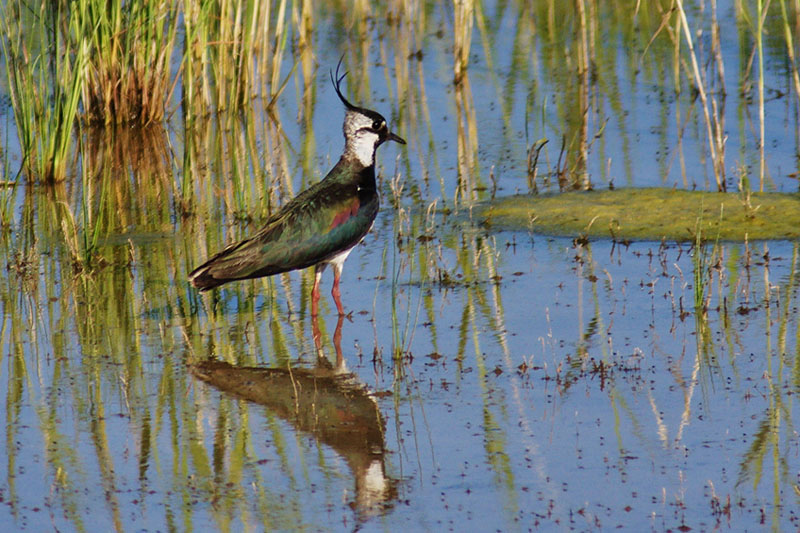
Northern Lapwing is a 30 cm large shorebird with striking pattern of greenish back, black chest and long, thin crest. In flight, it shows white tips on broad, rounded wings. Listen to the Northern lapwing’s call by clicking the button above.
Habitat
Fairly common in open habitats, from grassland and farmland to wetlands, and locally on coastal mudflats. In winter forms larger flocks on farmland and marshes.
Nutrition
Northern Lapwings diet consists of adult and larval insects, spiders, snails, earthworms. It feeds at night to reduce competition from other species such as gulls.
Breeding
Northern Lapwings are serially monogamous and form pairs only for a single breeding season. The species shows a preference for breeding on wet natural grasslands, meadows and patches of bare soil at low altitudes. The nest is a shallow scrape in short grass vegetation.
Migration
Most populations of this species are fully migratory and travel on a broad front out of Europe, although some in more temperate regions are sedentary. In Finland due to global warming, the spring migration and nesting occur earlier than before.
Distribution
The species breeds from Europe to the northern China, and winters from western Europe, through the Mediterranean, Middle East, to south-east China and southern Japan.
Status and conservation
IUCN status is Near Threatened due to declining populations. Causes include land-use intensification, wetland drainage, hunting, and egg collecting. Migration stopovers are also threatened by pollution, drainage, and habitat overgrowth. Read more about conservation actions in the booklet.
Cultural heritage
Northern Lapwing is linked to European folklore and farmland habitats, associated as good luck symbol, vigilance and adaptability. In Italy, especially Sardinia, it symbolizes fertility, protection, luck, and appears in traditional crafts and culture. Read more from the booklet.
Explore the factors affecting the species
Organism groups
Endangered status in Finland
ENDANGERED CATEGORY (International Union for Conservation of Nature (IUCN) classification)
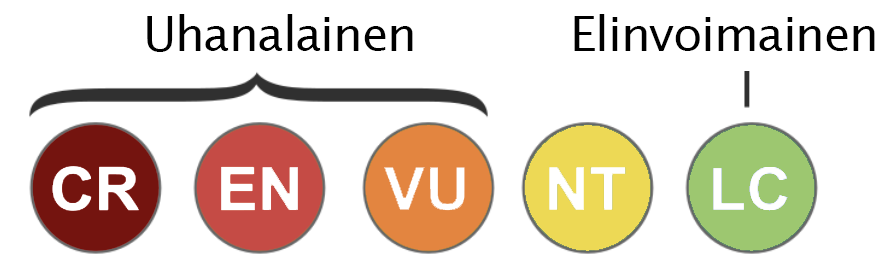
CR Critically endangered
EN Endangered
VU Endangered
NT Near threatened
LC Least concern
2019 LC - least concern
2015 LC - least concern
2010 LC - least concern
2000 LC - least concern
Regulations
No regulations.