
-

Common Crane – Grus grus
gynti_46, Common Crane (Grus grus). Creative Commons BY-NC-SA-2.0
gynti_46, Creative Commons Attribution Noncommercial Share-Alike 2.0
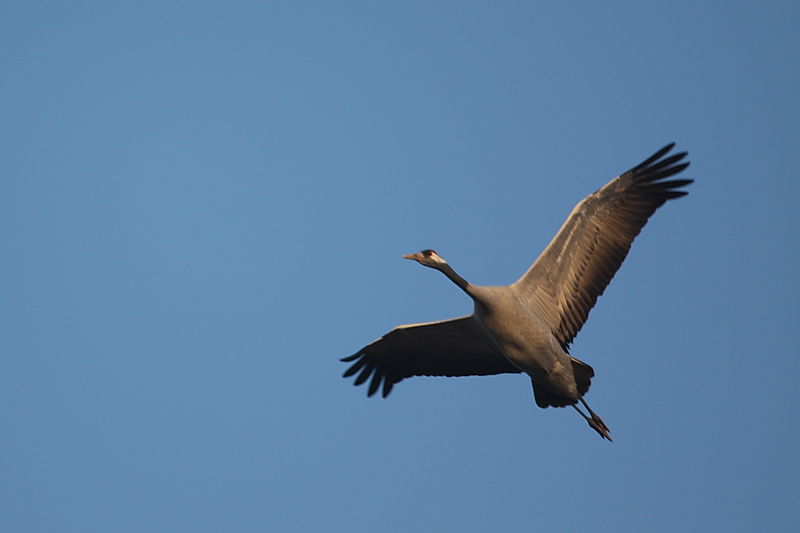
Common Crane
(fi: kurki, sv: trana)
Grus grus
A large, elegant bird of wetlands and open landscapes, known for its loud calls and impressive migratory flights.
Identification
A tall grey bird with long legs and neck. It has a black-and-white head pattern and a distinctive red patch on the crown. In flight, it stretches its neck and legs straight. Its trumpeting call can be heard from far away.
Habitat
The Common Crane breeds in wetlands, bogs, and marshes with nearby open areas. During migration and winter, it can also be seen in fields and agricultural land.
Nutrition
Feeds on plant material such as roots, seeds, and grains, as well as insects, worms, and small vertebrates.
Breeding
Nests in secluded wetlands. Builds a large nest from vegetation on the ground. Usually lays 1–2 eggs. Both parents care for the chicks.
Migration
A long-distance migrant. Birds from northern Europe migrate to southern Europe and Africa for the winter.
Distribution
Found across Europe and Asia. Breeds mainly in northern and eastern regions.
Status and conservation
Globally Least Concern (LC). Populations are increasing in many areas due to conservation efforts.
Cultural heritage
Often seen as a symbol of vigilance and longevity. Its migration is a strong seasonal sign in many cultures.
Explore the factors affecting the species
Organism groups
Endangered status in Finland
ENDANGERED CATEGORY (International Union for Conservation of Nature (IUCN) classification)
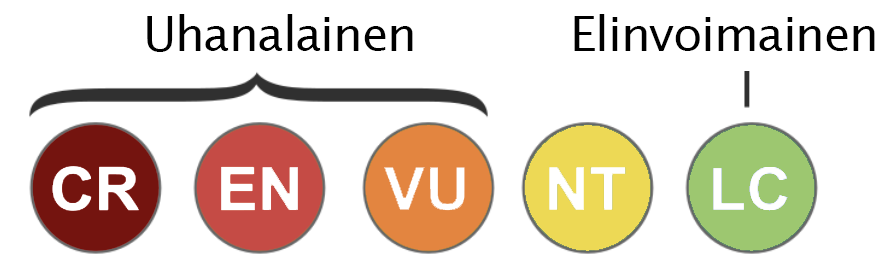
CR Critically endangered
EN Endangered
VU Endangered
NT Near threatened
LC Least concern
2019 LC - least concern
2015 LC - least concern
2010 LC - least concern
2000 LC - least concern
Regulations
EU Directive on Conservation of Wild Birds Annex I
Convention on International Trade in Endangered Species of Wild Flora and Fauna - CITES, Appendix II
EU regulation regarding CITES, Appendix A