
-

Great Spotted Woodpecker – Dendrocopos major
Tatiana Bulyonkova, Great Spotted Woodpecker. Creative Commons BY-NC-SA-2.0
Tatiana Bulyonkova, Creative Commons Attribution Noncommercial Share-Alike 2.0
-
Great Spotted Woodpecker – Dendrocopos major
Markus Varesvuo, Creative Commons Attribution Noncommercial Noderivatives 4.0
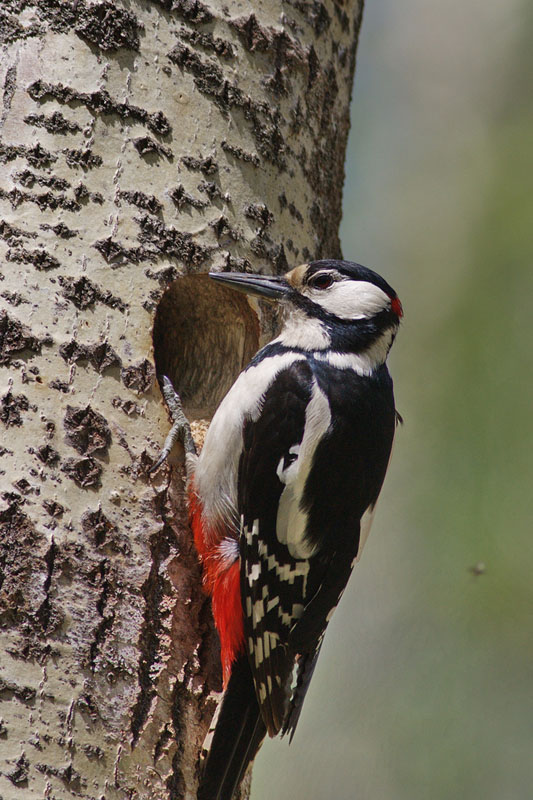

Great Spotted Woodpecker
(fi: käpytikka, sv: större hackspett)
Dendrocopos major
A familiar woodland bird known for its drumming on tree trunks.
Identification
A black-and-white woodpecker with a red patch under the tail. Males have a red patch on the back of the head, females do not. Strong bill used for pecking wood.
Habitat
The Great Spotted Woodpecker lives in forests, parks, and gardens with trees. It adapts well to human-altered landscapes.
Nutrition
Feeds on insects living under bark, seeds, and nuts. Often visits bird feeders, especially in winter.
Breeding
Excavates nest holes in tree trunks. Lays 4–7 eggs. Both parents incubate and feed the young.
Migration
Mostly resident, though some individuals may move short distances.
Distribution
Widespread across Europe and parts of Asia.
Status and conservation
Globally Least Concern (LC). Stable and common in most of its range.
Cultural heritage
Known as a “forest carpenter” due to its drumming, which is often used in folklore as a sign of life in the woods.
Explore the factors affecting the species
Organism groups
Endangered status in Finland
ENDANGERED CATEGORY (International Union for Conservation of Nature (IUCN) classification)
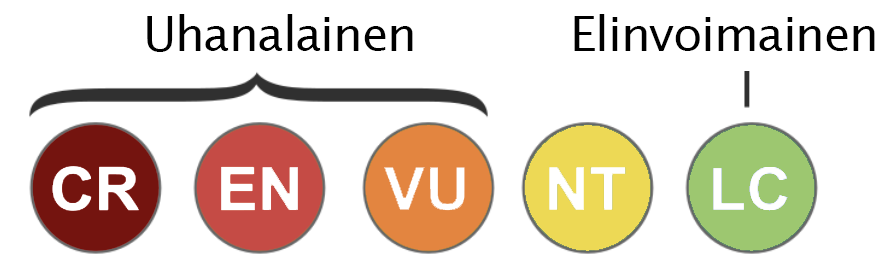
CR Critically endangered
EN Endangered
VU Endangered
NT Near threatened
LC Least concern
2019 LC - least concern
2015 LC - least concern
2010 LC - least concern
2000 LC - least concern
Regulations
No regulations.