
-

Grey Heron – Ardea cinerea
Luciano Giussani, Héron en vol. Creative Commons BY-NC-SA-2.0
Luciano Giussani, Creative Commons Attribution Noncommercial Share-Alike 2.0
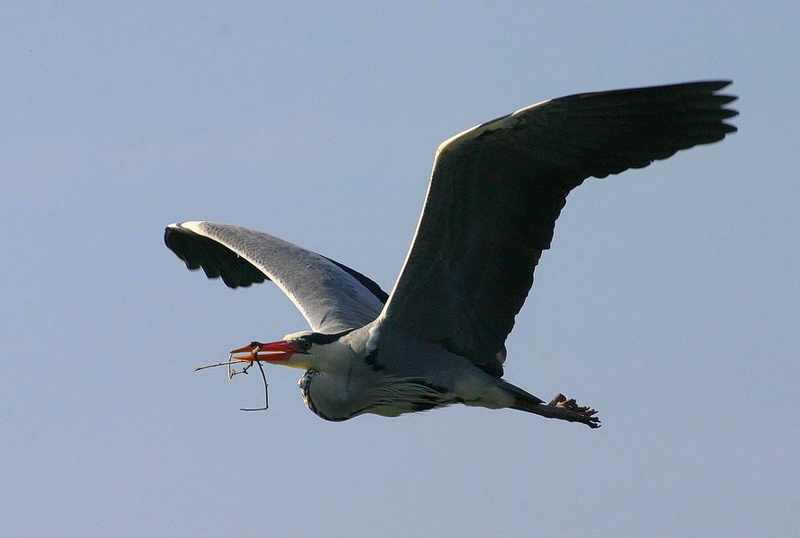
Grey Heron
(fi: harmaahaikara, sv: gråhäger)
Ardea cinerea
When it takes flight, its neck folds up, assuming a typical “S” shape.
Identification
The Grey Heron (Ardea cinerea) is distinguished from other Ardeidae by its large size: as an adult it can reach 90-98 centimeters in length and its weight can range from 1 to 2 kilograms.
Habitat
Optimal habitat for Grey Heron is uneven-aged hygrophilous forest predominantly with black alders, poplars and willows, with succession of tall (25-30 m), medium (15-20m) and low (8-15 m) tree cores and bands of tall shrubs (e.g., willows). The perimeter of the forest and part of its interior should have pools, ditches and canals.
Nutrition
The Grey Heron feeds on fish, frogs, tadpoles, water snails, crustaceans, mollusks, aquatic insects, small mammals and the young of other birds. It is active both during the day and at night and will travel as far as tens of kilometers from its nesting or roosting site to feed.
Breeding
This species nests in lowland forests, surrounded by rice fields, swamps and wet fallow lands used as feeding areas; locally in groves, cultivated poplar stands, wetlands with reed beds, tree rows, patrician parks, lake islets, coniferous reforestations, pre-Alpine rocky environments, and also in human-dominated habitats, such as suburban environments and highway junctions.
Migration
Different European populations exhibit different migratory behaviors: while populations in Italy are generally sedentary, those living in more northern countries in the cold months become gregarious and migrate in flocks to milder regions, settling along sheltered coasts and freshwater bodies of water.
Distribution
This species is widespread in the temperate zones of the Old World, except for Arctic areas and deserts. It lives in Europe, Africa and western Asia, eastern Asia and Madagascar.
Status and conservation
The Grey Heron is a species of low concern (Least Concern) according to the IUCN Red List, although its local populations may be threatened by habitat loss and water pollution. In Italy it is a protected species under Law 157/92, moreover it is protected under the Bern Convention, all. III.
Cultural heritage
The Grey Heron is an emblematic bird, appreciated for its elegant posture and associated with aquatic landscapes and marshy areas. It is seen as a symbol of wilderness and of patience in hunting.
Explore the factors affecting the species
Organism groups
Endangered status in Finland
ENDANGERED CATEGORY (International Union for Conservation of Nature (IUCN) classification)
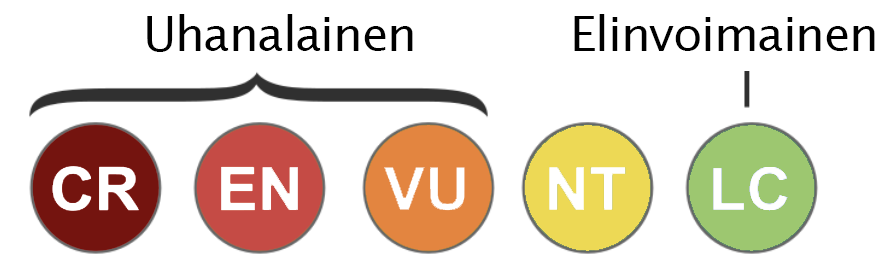
CR Critically endangered
EN Endangered
VU Endangered
NT Near threatened
LC Least concern
2019 LC - least concern
2015 LC - least concern
2010 LC - least concern
2000 LC - least concern
Regulations
Migratory birds of the EU Birds Directive
Migratory species that occur regularly in Finland, for the protection of which must be taken similar measures to those for Annex I species (eg the establishment of Natura 2000 sites).